
TL;DR
- Airbnb co-host fees are set by the listing owner, not by Airbnb: Airbnb's co-host payout tool supports the cleaning fee, the cleaning fee plus a percentage, a percentage, or a fixed amount per booking, calculated from the host's earnings after Airbnb's service fee.
- Airbnb's own fee is changing. In July 2026 Airbnb announced a single 15.5% host-paid service fee, replacing the split model where most hosts paid 3%. Check which one applies to your listing before you compare co-host quotes.
- In Vancouver a co-host works inside two rule sets: the City's short-term rental licence (principal residence only, $1,108 a year) and the provincial short-term rental registry, mandatory since May 1, 2025.
- Compare quotes by scope, not by the headline percentage: ask what's included (guest messages, cleaning, pricing, licence renewal) and what's billed on top.
- See how CinCin YVR CoHost structures its services →

What Do Airbnb Co-Host Fees Actually Cover? A Quick Reference
Here's a quick overview of what co-host services usually include.
These tiers are illustrative. Service names and scope vary by provider, and no fee figures are implied. See what CinCin YVR CoHost includes in each service →
What you pay depends on the scope of service, the property type and how much licensing and compliance work the listing needs. Ask every co-host for a written list of what their fee covers.
What Are Airbnb Co-Host Fees and How Do They Work?
When you list a property on Airbnb, you can add a co-host to your account. This person — or company — takes on some or all of the operational work: responding to guests at midnight, coordinating cleaners after checkout, adjusting nightly rates to match demand.
In exchange, they earn a percentage of your booking revenue. That's the co-host fee.
But the details matter enormously. Co-hosting in Vancouver is fundamentally different from co-hosting in Calgary or Phoenix. Here's why:
Vancouver's rules are stricter than many markets. You need a short-term rental licence from the City of Vancouver to rent your home for less than 90 consecutive days, the home must be your principal residence, and the licence number has to appear in every online listing. Operating without a licence can result in fines or prosecution.
The Province added a second layer. Under B.C.'s Short-Term Rental Accommodations Act, a principal residence requirement took effect May 1, 2024 in municipalities of 10,000 people or more, Vancouver included, and registration with the provincial short-term rental registry became mandatory on May 1, 2025. Since June 1, 2025, platforms such as Airbnb remove listings that don't show a valid provincial registration number.
So a Vancouver listing needs both a City licence and a provincial registration number, and a lapse in either can get the listing removed.
A co-host who knows Airbnb's tools but not these rules can put your listing at risk. In Vancouver, regulatory knowledge is part of the job.
What's the Difference Between a Co-Host and a Full-Service Property Manager?
These two terms get mixed up constantly. They're not the same thing.
A co-host works inside your Airbnb account. They're added to your listing and handle the day-to-day: messages, reviews, check-ins, cleaning calls. If the listing owner sets up a co-host payout, Airbnb pays the co-host out of the host's earnings for each booking. Airbnb's help centre notes that co-host payouts are not supported for its Residential Hosting program in the UK and Canada, so confirm the option appears in your account.
A full-service property manager operates more broadly. They may list your property on several platforms (Airbnb, VRBO, Booking.com), handle licence paperwork, linens and maintenance, and usually work under a formal service contract outside Airbnb's co-host tool.
The fee structure differs too. Co-hosts and managers commonly charge a percentage of booking revenue, a fixed amount per booking, or a mix, and Airbnb's own co-host payout tool supports each of these. Scope drives the number: basic listing help costs less than full-service management that includes compliance work.
For Vancouver owners, look for both: day-to-day Airbnb account management and working knowledge of the City and provincial rules. Not every co-host on Airbnb has the second part.
CinCin YVR CoHost offers both co-hosting and full-service management for Vancouver STR owners →
What Does a Co-Host Actually Do for That Fee?
Not all co-hosts do the same things. This is where most hosts get burned.
Some co-hosts handle only guest communication. Others handle everything.
Guest Communication
- Pre-booking inquiries and guest screening
- Check-in instructions and arrival coordination
- Mid-stay requests and issue resolution
- Post-stay review management and response
Listing Management
- Photo optimization and listing copy updates
- Calendar management across all active platforms
- Seasonal pricing adjustments and promotional blocks
Operations
- Cleaning team coordination and quality checks
- Linen and supply restocking
- Property inspection after each guest stay
Compliance — Vancouver-specific
- City short-term rental licence support and annual renewal tracking
- Principal-residence documentation management
- Monitoring City bylaw changes and provincial registry requirements
Revenue Optimization
- Dynamic pricing via tools like PriceLabs or Wheelhouse
- Competitor rate benchmarking through AirDNA
- Occupancy rate tracking and demand forecasting
Ask any co-host to show how their pricing has performed on listings they manage, rather than accepting a general claim that dynamic pricing pays for itself. If your co-host isn't doing at least half of the above, their fee deserves hard questions.
How Are Airbnb Co-Host Fees Calculated in Practice?
Airbnb calculates co-host payouts from the host's earnings for each booking, which is what's left after Airbnb's service fee. Airbnb's help centre lists four payout options the listing owner can choose: the cleaning fee, the cleaning fee plus a percentage, a percentage, or a fixed amount per booking. Host and co-host payouts are sent after the guest's scheduled check-in.
The fee base matters because Airbnb's own fee is changing. In a July 2026 announcement, Airbnb said it is combining guest and host fees into a single 15.5% service fee paid by hosts, and asked hosts outside the EEA to adjust prices by September 15, 2026. Under the older split-fee model, most hosts paid 3% and guests paid the rest (Airbnb service fees). A higher host fee shrinks the earnings a percentage co-host fee is calculated on, so confirm which base your co-host uses before you negotiate.
Some co-hosts charge a flat monthly fee instead of a percentage. That protects you in a slow month, but it doesn't reward the co-host for raising your revenue. A percentage ties their pay to your bookings.
For what CinCin YVR CoHost includes, see our services page →.
A percentage figure means little until you know exactly what it covers.
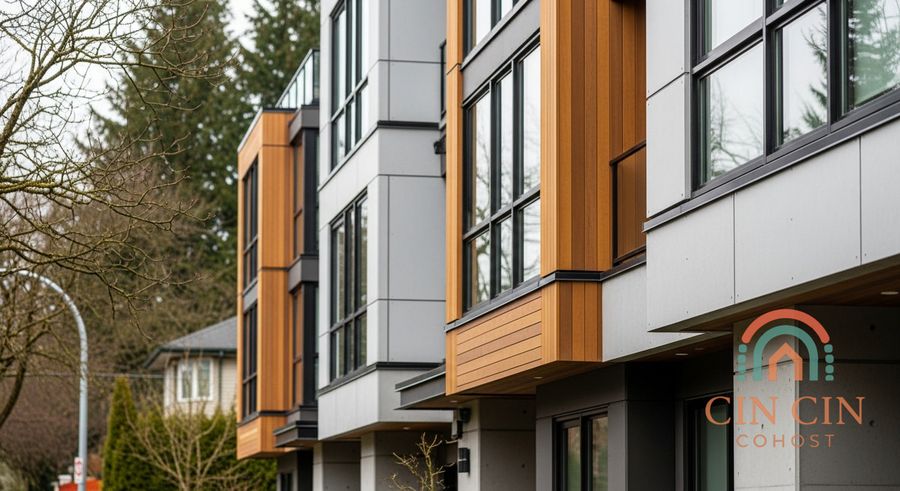
Why Vancouver's STR Rules Change Everything
Most co-host fee comparisons skip this entirely. They shouldn't.
The City of Vancouver requires a short-term rental licence, the home must be your principal residence, and each person can hold only one licence. An investment property you don't live in doesn't qualify. You also need strata and/or landlord approval before you apply.
The licence costs $1,108 plus a $77 application fee, renews at $1,108 each year by December 31 (with a $111 late fee), and operating without one can result in fines or prosecution.
B.C. added provincial rules on top. The Short-Term Rental Accommodations Act received Royal Assent on October 26, 2023. Its principal residence requirement took effect May 1, 2024 in municipalities of 10,000 people or more and nearby communities, including Vancouver, and limits short-term rentals to the host's principal residence plus one secondary suite or accessory dwelling unit on the same property. It doesn't apply everywhere in B.C.; resort municipalities such as Whistler are exempt.
Registration with the provincial short-term rental registry has been mandatory since May 1, 2025. The annual fee is $100 when the rental is in the home where you live and $450 when you don't live in the rental unit, such as a secondary suite. From June 1, 2025, platforms remove listings without a valid registration number, and penalties include administrative monetary penalties, compliance orders and listing removal.
A co-host who only knows Airbnb's calendar and pricing isn't enough here. You want someone who tracks licence renewals, understands the principal residence rules and watches for bylaw changes.
What Should Be Included in a Co-Host Fee?
Here's a framework. Use it to evaluate any co-host you're considering.
Non-negotiables — these must be included:
24/7 guest communication. Guests book at all hours. For Superhost status, Airbnb requires a host to respond to 90% of new messages within 24 hours, keep a 4.8 or higher overall rating, host at least 10 reservations (or 3 totalling 100 nights) and keep cancellations under 1% over the past 12 months. A co-host who replies slowly puts those numbers at risk.
Cleaning team coordination. Not just booking a cleaner: managing timing, confirming the clean and handling same-day turnovers. A missed clean shows up in your ratings, and ratings feed both Superhost status and search placement.
Dynamic pricing management. Airbnb lists price among its search ranking factors, including how your total price compares with similar listings nearby. Tools like PriceLabs and Wheelhouse adjust rates to demand and local events. Ask your co-host which one they use and how often they review the rules.
Listing maintenance. Airbnb lists photo and video quality, ratings and reviews, and how often guests save, book and message a listing among its search ranking factors. Outdated photos and copy work against you, so your co-host should refresh them.
Compliance monitoring. Vancouver short-term rental licences renew every year by December 31, and provincial registration carries an annual fee. Someone needs to track those dates and watch for bylaw changes. Agree in writing whether that's your co-host's job.
Common add-ons billed separately:
- Professional photography and reshoots
- Interior staging and welcome pack curation
- Deep cleaning between seasons
- Maintenance and repair coordination
- Multi-platform listing on VRBO, Booking.com, or direct-book sites
Know which category every service falls into before you sign. Surprises on month-three invoices are avoidable.
What Hidden Costs Should You Watch For in a Co-Host Agreement?
Most agreements look clean on first read. Surprises show up later.
Five costs to check for:
Cleaning markups. Some co-hosts charge cleaning at "market rate" — then add a markup before passing the cost to you. Ask directly: do you add a coordination fee on cleaning, or pass costs through at cost?
Maintenance call-out fees. Some co-hosts add a coordination fee on top of the repair bill. Get that structure in writing before you sign.
Supply restocking charges. Toiletries, paper towels, coffee pods, laundry pods. These add up fast in a high-occupancy property. Some co-hosts include supply management. Others bill it separately. Know which applies to your arrangement.
Response-time gaps. An agreement with no response-time commitment gives the co-host no reason to be quick, so put one in writing. Airbnb's Superhost standard is a reply to 90% of new messages within 24 hours; you can ask for faster replies to pre-booking inquiries than that.
Exit penalties. Some co-host agreements lock you in for 12 months. If performance falls short at month four, you're still paying. Read the termination clause before you commit.
A transparent co-host answers all of these directly. Deflection tells you something too.
How Do You Know If a Co-Host Fee Is Worth It?
Run the math. Not feelings. Numbers.
Here's the framework every Vancouver property owner should use before hiring a co-host:
Step 1 — Estimate your gross revenue potential. Use a market-data tool such as AirDNA, or comparable listings in your neighbourhood, to estimate nightly rates and occupancy for your property type and bedroom count. Treat any estimate as a starting point, not a forecast.
Step 2 — Calculate the co-host fee cost. Take the percentage you've been quoted. Apply it to your estimated monthly gross. This is your management cost.
Step 3 — Add direct operating costs. Cleaning, supplies, Airbnb's host service fee (15.5% under Airbnb's single-fee model) and any projected maintenance.
Step 4 — Estimate your self-management cost. What is your time worth per hour, and how many hours a month would you spend on messages, turnovers, pricing and licence paperwork? Track a typical month before you decide.
Step 5 — Factor in the revenue differential. Compare your own results with what the co-host projects, and ask them to show numbers from comparable listings they manage. If the extra revenue they can show exceeds their fee, the arrangement pays for itself before you count your freed time.
The right co-host can pay for themselves. The wrong one costs you in missed revenue, lower ratings and compliance risk.
What Should You Ask Before Hiring a Co-Host in Vancouver?
Don't sign until you have answers to all ten of these:
1. Will you be added through Airbnb's co-host tool? Airbnb's co-host tool gives shared access to the listing, and the listing owner can set a co-host payout inside Airbnb. Some managers work entirely outside it. Know which arrangement you're entering before you hand over listing access.
2. What is your guaranteed response time for guest messages? Airbnb's Superhost standard is a reply to 90% of new messages within 24 hours, and Airbnb counts responsiveness toward ranking. Ask for a specific commitment in writing.
3. Which dynamic pricing tool do you use, and how often are rates updated? Ask by tool name: PriceLabs, Wheelhouse or another. Ask how often the rate rules are reviewed.
4. How do you handle licence and registration renewals? Vancouver short-term rental licences renew each year by December 31, and provincial registration carries an annual fee. Who tracks the dates? Who completes the paperwork? What happens if a renewal lapses?
5. What occupancy and nightly rates do your Vancouver listings achieve? Ask for figures from listings comparable to yours, and check them against those listings' public calendars and reviews.
6. Can you show me review scores across listings you manage? Ask for direct Airbnb profile links or managed listing URLs. Past performance is the clearest signal you'll get.
7. How do you handle emergency maintenance after hours? Burst pipe at 2 AM in a Kitsilano unit. Who calls the plumber? Who authorizes the cost? Is there a 24-hour line?
8. Is cleaning coordination included or billed separately? If separately, what's the markup structure?
9. What platforms do you list on beyond Airbnb? Listing on VRBO or Booking.com as well adds booking channels, but also adds calendar and compliance work. If your co-host operates Airbnb-only, ask why.
10. Do you understand both Vancouver's short-term rental licence rules and B.C.'s Short-Term Rental Accommodations Act? This is the test. Ask them to explain the provincial principal residence requirement and the registration number your listing must display. A co-host who hesitates here is a compliance risk.

Test Your Knowledge
1. What two regulatory layers must Vancouver short-term rental operators comply with?
- A. Local city bylaw and federal housing regulations
- ✅ B. City of Vancouver short-term rental licensing and B.C.'s Short-Term Rental Accommodations Act
- C. Airbnb platform compliance and neighborhood association approval
- D. Provincial business licensing and municipal zoning restrictions
Vancouver operators need a City short-term rental licence and must meet the provincial Short-Term Rental Accommodations Act, including its principal residence requirement (in effect May 1, 2024) and provincial registration (mandatory since May 1, 2025).
2. How do co-hosts and full-service property managers differ operationally?
- A. Co-hosts manage multiple properties; property managers manage single listings
- ✅ B. Co-hosts operate within Airbnb accounts; property managers list across multiple platforms
- C. Property managers only handle guest communication
- D. Co-hosts always charge higher fees than property managers
*The article clarifies that co-hosts are partners within your Airbnb account, while full-service property managers operate across platforms like Airbnb, VRBO, and Booking.com.*
3. What does the article note about typical professional co-host and management fees?
Fees vary with the scope of service, and Airbnb's co-host payout tool supports a percentage, a fixed amount per booking, the cleaning fee, or the cleaning fee plus a percentage.
4. Why is platform-only expertise insufficient for Vancouver co-hosts?
Vancouver requires a City short-term rental licence for a principal residence plus provincial registration, so a co-host without compliance knowledge can put the listing at risk.
FAQ
What percentage does an Airbnb co-host typically charge?
There's no Airbnb-set rate. The listing owner and co-host agree on it, and Airbnb's co-host payout tool supports a percentage of the host's earnings, a fixed amount per booking, the cleaning fee, or the cleaning fee plus a percentage. Read any percentage against the scope: guest messaging alone costs less than full-service management with pricing, cleaning and licence work. For CinCin YVR CoHost's services, see our services page.
Can I add a co-host to my Airbnb listing for free?
Airbnb's help centre doesn't list a charge for adding a co-host. You add one through your listing settings, and the listing owner decides what, if anything, Airbnb pays the co-host from each booking. Airbnb doesn't set co-host rates; that's agreed between you and the co-host. Airbnb notes that co-host payouts aren't supported for its Residential Hosting program in the UK and Canada, so check whether the payout option appears in your account, or pay the co-host directly under a written agreement.
Is a co-host the same as a property management company?
Not necessarily. A co-host works inside your Airbnb account. A property management company typically operates across several booking platforms (Airbnb, VRBO, Booking.com) and usually works under a more formal service contract. In Vancouver the key point is compliance: both need to understand the City of Vancouver's short-term rental licence requirements and B.C.'s Short-Term Rental Accommodations Act, whose principal residence requirement took effect May 1, 2024. The label matters less than the regulatory knowledge your co-host brings.
Does my co-host need a licence for me to comply with Vancouver's short-term rental rules?
The licence that matters is yours. The City of Vancouver's short-term rental licence covers the operator's own principal residence, and each person can hold only one, so a co-host can't hold it for you. A knowledgeable co-host can still help you stay compliant by tracking renewal dates, advising on allowable rental setups and keeping your listing documents in order. Under the Short-Term Rental Accommodations Act, both hosts and the platforms that list their properties have compliance obligations.
What happens if my co-host makes an error that violates Vancouver's STR bylaws?
You are the licence holder, so you carry the legal and financial responsibility. That's why Vancouver bylaw knowledge matters more than general Airbnb experience when you choose a co-host. Fines can add up daily: B.C. raised the maximum municipal ticket fine to $3,000 per infraction, per day, and platforms must remove listings that lack a valid provincial registration number. To see what CinCin YVR CoHost handles, including City of Vancouver business licence and provincial registration support, see our services page →.
TL;DR
- Airbnb 联合房东费用由房源所有者设定,而非 Airbnb:Airbnb 的联合房东收款工具支持清洁费、清洁费加百分比、百分比或每笔预订固定金额,按扣除 Airbnb 服务费后的房东收入计算。
- Airbnb 自身的费用正在改变:2026 年 7 月,Airbnb 宣布改为由房东支付的单一 15.5% 服务费,取代大多数房东只付 3% 的分摊模式。在比较联合房东报价之前,先确认您的房源适用哪种费用。
- 在温哥华,联合房东必须同时遵守两套规则:温哥华市的短租执照(仅限主要住所,每年 1,108 加元)和省级短租登记系统(自 2025 年 5 月 1 日起强制登记)。
- 比较报价时看服务范围,而不是百分比数字:问清楚包含哪些内容(客人消息、清洁、定价、执照续期),哪些另行收费。
- 了解 CinCin YVR CoHost 如何构建其服务 →
Airbnb 联合房东费用实际涵盖哪些内容?快速参考
先快速了解联合房东服务通常包含哪些内容。
以上层级仅作说明,不同服务商的服务名称和范围各不相同,也不代表任何费用数字。查看 CinCin YVR CoHost 各项服务包含的内容 →
您支付的费用取决于服务范围、物业类型,以及房源需要多少执照和合规工作。请每位联合房东以书面形式列明其费用涵盖的内容。
Airbnb 联合房东费用是什么?它们如何运作?
当您在 Airbnb 上发布房源时,您可以为账户添加一名联合房东。此人或公司承担部分或全部运营工作:半夜回复客人、退房后协调清洁工、根据需求调整每晚房价。
作为回报,他们从您的预订收入中抽取一定比例。这就是联合房东费用。
但细节至关重要。在温哥华进行联合托管与在卡尔加里或凤凰城有本质区别。原因如下:
温哥华的规则比许多市场更严格。在温哥华出租住所少于连续 90 天,需要持有温哥华市颁发的短租执照;该物业必须是您的主要住所,且所有网上房源都必须显示执照号码。无照经营可能被罚款或起诉。
省政府又增加了一层规定。根据不列颠哥伦比亚省《短期租赁住宿法》,主要住所要求于 2024 年 5 月 1 日在人口 10,000 人及以上的市镇(包括温哥华)生效;省级短租登记于 2025 年 5 月 1 日起成为强制要求。自 2025 年 6 月 1 日起,Airbnb 等平台会删除未显示有效省级登记号码的房源。
因此,温哥华的房源既需要市政执照,也需要省级登记号码,任何一项失效都可能导致房源被下架。
只懂 Airbnb 工具却不了解这些规则的联合房东,可能让您的房源面临风险。在温哥华,监管知识是这份工作的一部分。
联合房东和全面物业管理经理有什么区别?
这两个术语经常被混淆。它们不是一回事。
联合房东在您的 Airbnb 账户内工作。他们被添加到您的房源中,处理日常事务:消息、评论、入住、清洁安排。如果房源所有者设置了联合房东收款,Airbnb 会从每笔预订的房东收入中支付给联合房东。Airbnb 帮助中心注明,英国和加拿大的 Residential Hosting 计划不支持联合房东收款,因此请确认您的账户中是否有此选项。
全面物业管理经理的运作范围更广。他们可能将您的房源发布在 Airbnb、VRBO、Booking.com 等多个平台,处理执照文件、布草和维护,通常签订更正式的服务合同,并在 Airbnb 的联合房东工具之外运作。
费用结构也不同。联合房东和物业管理公司常见的收费方式是按预订收入的百分比、每笔预订固定金额或两者结合,Airbnb 自己的联合房东收款工具也支持这些方式。服务范围决定价格:基础房源协助比包含合规工作的全面管理收费更低。
对温哥华业主来说,两者都要:日常的 Airbnb 账户管理,以及对市政和省级规则的实际了解。并非每个 Airbnb 联合房东都具备后者。
CinCin YVR CoHost 为温哥华短租业主提供联合托管和全面物业管理服务 →
联合房东实际上为这笔费用做什么?
并非所有联合房东都做同样的事情。这是大多数房东最容易吃亏的地方。
有些联合房东只处理客人沟通。其他人则处理所有事务。
客人沟通
- 预订前咨询和客人筛选
- 入住说明和到达协调
- 住宿期间请求和问题解决
- 退房后评论管理和回复
房源管理
- 照片优化和房源描述更新
- 所有活跃平台的日历管理
- 季节性价格调整和促销屏蔽
运营
- 清洁团队协调和质量检查
- 布草和用品补充
- 每次客人入住后的物业检查
合规——温哥华特有
- 温哥华市短租执照支持和年度续期追踪
- 主要住所文件管理
- 监控市政法规变更和省级登记要求
收入优化
- 通过 PriceLabs 或 Wheelhouse 等工具进行动态定价
- 通过 AirDNA 进行竞争对手费率基准比较
- 入住率跟踪和需求预测
请联合房东展示其定价在所管理房源上的实际表现,而不是接受“动态定价一定划算”这种笼统说法。如果您的联合房东至少没有做到上述一半,那么他们的费用就值得质疑。
Airbnb 联合房东费用在实践中如何计算?
Airbnb 按每笔预订的房东收入(即扣除 Airbnb 服务费后的金额)计算联合房东收款。Airbnb 帮助中心列出房源所有者可选择的四种方式:清洁费、清洁费加百分比、百分比,或每笔预订固定金额。房东和联合房东的款项会在客人预定入住日期之后发放。
计算基数很重要,因为 Airbnb 自身的费用正在改变。Airbnb 在 2026 年 7 月的公告中表示,将把房客和房东费用合并为由房东支付的单一 15.5% 服务费,并要求欧洲经济区以外的房东在 2026 年 9 月 15 日前调整价格。在原有的分摊模式下,大多数房东支付 3%,其余由房客支付(Airbnb 服务费说明)。房东费用提高后,按百分比计算的联合房东费用基数会变小,因此谈判前请确认联合房东使用哪个基数。
一些联合房东收取固定月费而不是百分比。这在淡季对您有利,但无法激励联合房东提高您的收入。百分比收费则把他们的报酬与您的预订挂钩。
想了解 CinCin YVR CoHost 的服务内容,请查看我们的服务页面 →。
在弄清楚百分比具体涵盖哪些内容之前,这个数字意义不大。
为什么温哥华的短租规则改变了一切
大多数联合房东费用比较都完全跳过这一点。它们不应该。
温哥华市要求持有短租执照,物业必须是您的主要住所,且每人只能持有一个执照。您不居住的投资物业不符合资格。申请前还需获得 strata 和/或房东的批准。
执照费为 1,108 加元,另加 77 加元申请费;每年续期费用为 1,108 加元,须在 12 月 31 日前续期(逾期费 111 加元)。无照经营可能被罚款或起诉。
不列颠哥伦比亚省在此之上增加了省级规定。《短期租赁住宿法》于 2023 年 10 月 26 日获得御准。其主要住所要求于 2024 年 5 月 1 日在人口 10,000 人及以上的市镇及周边社区生效(包括温哥华),将短租限制在房东的主要住所,以及同一物业上的一个附属套房或附属住宅单元。该要求并非适用于全省,惠斯勒等度假市镇获得豁免。
自 2025 年 5 月 1 日起,必须在省级短租登记系统登记。年费为:短租位于您居住的住所内,100 加元;您不居住在短租单元内(例如附属套房),450 加元。自 2025 年 6 月 1 日起,平台会删除没有有效登记号码的房源,处罚包括行政罚款、合规令以及从平台删除房源。
只了解 Airbnb 日历和定价的联合房东在这里是不够的。您需要一个能跟踪执照续期、了解主要住所规则并关注法规变更的人。
了解 CinCin YVR CoHost 如何为温哥华短租业主处理执照与省级登记合规 →
联合房东费用中应包含哪些内容?
这是一个框架。用它来评估您正在考虑的任何联合房东。
不可协商项——这些必须包含:
24/7 客人沟通。 客人随时都会预订。要获得超赞房东身份,Airbnb 要求房东在 24 小时内回复 90% 的新消息,保持 4.8 分或以上的总体评分,在过去 12 个月内完成至少 10 次预订(或 3 次合计至少 100 晚),且取消率低于 1%。回复慢的联合房东会让这些指标面临风险。
清洁团队协调。 不仅仅是预订清洁工,还要安排时间、确认清洁完成、处理当日交接。一次清洁失误会反映在评分上,而评分同时影响超赞房东身份和搜索排名。
动态定价管理。 Airbnb 将价格列为搜索排名因素之一,包括您的总价与附近类似房源的比较。PriceLabs 和 Wheelhouse 等工具会根据需求和本地活动调整房价。问问您的联合房东使用哪一种,以及多久检查一次定价规则。
房源维护。 Airbnb 将照片和视频质量、评分和评价,以及客人收藏、预订和发消息的频率列为搜索排名因素。过时的照片和描述对您不利,联合房东应主动更新。
合规监控。 温哥华短租执照须每年在 12 月 31 日前续期,省级登记也需每年缴费。需要有人跟踪这些日期并关注法规变更。请以书面形式约定这是否由联合房东负责。
通常单独计费的附加项:
- 专业摄影和重新拍摄
- 室内布置和欢迎包策划
- 季节间的深度清洁
- 维护和维修协调
- 在 VRBO、Booking.com 或直订网站上的多平台发布
在签署前,了解每个服务属于哪个类别。第三个月的账单上的意外是可以避免的。
在联合房东协议中应注意哪些隐藏成本?
大多数协议在初读时看起来很清晰。意外情况会在之后出现。
需要检查的五种费用:
清洁加价。 一些联合房东按“市场价”收取清洁费——然后在此基础上加价再转嫁给您。直接询问:您是否对清洁服务收取协调费,还是按成本价转嫁?
维护上门费。 一些联合房东会在维修费之外另加协调费。请在签约前把这种收费结构写进合同。
用品补充费。 洗漱用品、纸巾、咖啡胶囊、洗衣凝珠。在高入住率的物业中,这些费用会迅速累积。一些联合房东包含用品管理。另一些则单独收费。了解您的安排属于哪种情况。
响应时间缺口。 没有响应时间承诺的协议无法促使联合房东快速回复,请写进合同。Airbnb 的超赞房东标准是 24 小时内回复 90% 的新消息;对于预订前咨询,您可以要求比这更快的回复。
退出罚金。 一些联合房东协议将您锁定 12 个月。如果第四个月表现不佳,您仍需支付。在承诺前阅读终止条款。
一个透明的联合房东会直接回答所有这些问题。回避也说明了问题。
如何判断联合房东费用是否值得?
做数学计算。不是凭感觉。用数字说话。
以下是每位温哥华物业所有者在聘请联合房东前应使用的框架:
第 1 步——估算您的总收入潜力。 使用 AirDNA 等市场数据工具,或参考您社区内的可比房源,估算您的物业类型和卧室数量对应的每晚房价和入住率。任何估算都只是起点,而不是预测。
第 2 步——计算联合房东费用成本。 取您被报价的百分比。应用于您估算的月总收入。这是您的管理成本。
第 3 步——加上直接运营成本。 清洁、用品、Airbnb 的房东服务费(单一费用模式下为 15.5%)以及预计的维护费用。
第 4 步——估算您自行管理的成本。 您的时间每小时值多少钱?每月处理消息、交接清洁、定价和执照文件要花多少小时?做决定前,先记录一个典型月份。
第 5 步——考虑收入差异。 将您自己的业绩与联合房东的预测进行比较,并请他们展示所管理的可比房源的数据。如果他们能证明的额外收入超过其费用,这项安排在您计算节省的时间之前就已经收回成本。
合适的联合房东可以收回自身成本。错误的联合房东会让您损失收入、评分下降,并带来合规风险。
在温哥华聘请联合房东前应询问哪些问题?
在您对以下所有十个问题得到答案之前,不要签署:
1. 您会通过 Airbnb 的联合房东工具被添加吗? Airbnb 的联合房东工具提供共享的房源访问权限,房源所有者也可以在 Airbnb 内设置联合房东收款。一些管理者完全在工具之外运作。在交出房源访问权限之前,先弄清楚您进入的是哪种安排。
2. 您对客人消息的保证响应时间是多少? Airbnb 的超赞房东标准是 24 小时内回复 90% 的新消息,Airbnb 也会把回复情况计入排名。请要求对方以书面形式作出具体承诺。
3. 您使用哪种动态定价工具,费率多久更新一次? 按工具名称询问:PriceLabs、Wheelhouse 或其他。询问费率规则多久审查一次。
4. 您如何处理执照和登记续期? 温哥华短租执照每年须在 12 月 31 日前续期,省级登记也需每年缴费。谁跟踪日期?谁完成文件?如果续期逾期会怎样?
5. 您在温哥华管理的房源入住率和每晚房价是多少? 请对方提供与您房源类似的房源数据,并对照这些房源的公开日历和评价进行核实。
6. 您能向我展示您管理的房源的评分吗? 要求直接提供 Airbnb 个人资料链接或管理的房源 URL。过往表现是您能得到的最清晰的信号。
7. 您在非工作时间如何处理紧急维护? 凌晨 2 点基斯兰奴单元的水管爆裂。谁打电话给水管工?谁授权费用?是否有 24 小时热线?
8. 清洁协调是包含在内还是单独计费? 如果单独计费,加价结构是什么?
9. 除了 Airbnb,您还在哪些平台上发布房源? 同时在 VRBO 或 Booking.com 发布可以增加预订渠道,但也会增加日历和合规工作。如果您的联合房东只运营 Airbnb,请问清楚原因。
10. 您是否了解温哥华的短租执照规定和不列颠哥伦比亚省的《短期租赁住宿法》? 这是考验。请他们解释省级主要住所要求,以及房源必须显示的登记号码。在这里犹豫的联合房东就是合规风险。
测试您的知识
1. 温哥华短租运营者必须应对哪两层监管?
- A. 当地市政法和联邦住房法规
- ✅ B. 温哥华市短租执照和不列颠哥伦比亚省的《短期租赁住宿法》
- C. Airbnb 平台合规和社区协会批准
- D. 省级营业执照和市政分区限制
温哥华运营者需要持有市政短租执照,并遵守省级《短期租赁住宿法》,包括主要住所要求(2024 年 5 月 1 日生效)和省级登记(2025 年 5 月 1 日起强制)。
2. 联合房东和全面物业管理经理在运营上有何不同?
- A. 联合房东管理多个物业;物业管理经理管理单个房源
- ✅ B. 联合房东在 Airbnb 账户内运作;物业管理经理跨多个平台发布房源
- C. 物业管理经理只处理客人沟通
- D. 联合房东总是比物业管理经理收费更高
*文章阐明,联合房东是您 Airbnb 账户内的合作伙伴,而全面物业管理经理则跨平台运营,如 Airbnb、VRBO 和 Booking.com。*
3. 文章对典型的专业联合房东和管理费有何说明?
费用随服务范围而变化;Airbnb 的联合房东收款工具支持百分比、每笔预订固定金额、清洁费,或清洁费加百分比。
4. 为什么仅凭平台专业知识对温哥华的联合房东来说是不够的?
温哥华要求主要住所持有市政短租执照,并完成省级登记,因此缺乏合规知识的联合房东可能让房源面临风险。
常见问题解答
Airbnb 联合房东通常收取多少百分比?
Airbnb 没有统一的联合房东费率,由房源所有者与联合房东协商决定。Airbnb 的联合房东收款工具支持按房东收入的百分比、每笔预订固定金额、清洁费,或清洁费加百分比。报价的百分比要结合服务范围来看:只负责客人消息的服务,比包含定价、清洁和执照工作的全面管理收费更低。CinCin YVR CoHost 的服务内容请见我们的服务页面。
我可以免费为我的 Airbnb 房源添加联合房东吗?
Airbnb 帮助中心没有列出添加联合房东的收费。您可以在房源设置中添加联合房东,并由房源所有者决定 Airbnb 从每笔预订中向联合房东支付多少(如有)。Airbnb 不设定联合房东费率,这由您和联合房东协商。Airbnb 注明英国和加拿大的 Residential Hosting 计划不支持联合房东收款,因此请确认您的账户中是否有此选项,或按书面协议直接向联合房东付款。
联合房东和物业管理公司一样吗?
不一定。联合房东在您的 Airbnb 账户内工作。物业管理公司通常跨多个预订平台运营(Airbnb、VRBO、Booking.com),并签订更正式的服务合同。在温哥华,关键在于合规:两者都需要了解温哥华市的短租执照要求和不列颠哥伦比亚省的《短期租赁住宿法》(其主要住所要求于 2024 年 5 月 1 日生效)。名称不如联合房东的监管知识重要。
在温哥华,联合房东需要持有执照,我才能遵守短租规定吗?
关键的执照是您自己的。温哥华市的短租执照针对运营者本人的主要住所,每人只能持有一个,因此联合房东无法替您持有。但一位了解规则的联合房东可以帮助您保持合规:跟踪续期日期、就允许的出租方式提供建议,并整理房源文件。根据《短期租赁住宿法》,房东和发布房源的平台都负有合规义务。
如果我的联合房东犯了违反温哥华短租法规的错误,会发生什么?
您是执照持有者,承担法律和财务责任。所以选择联合房东时,了解温哥华法规比一般的 Airbnb 经验更重要。罚款可能按天累积:不列颠哥伦比亚省已将市政罚单上限提高到每项违规每天 3,000 加元,平台也必须删除没有有效省级登记号码的房源。
想了解 CinCin YVR CoHost 负责哪些工作,包括温哥华市营业执照和省级短租登记支持,请查看我们的服务页面 →
相关文章



Enjoy our content?喜歡我們的內容嗎?
Make us your preferred source on Google在 Google 將我們設為首選來源